Quick start
This guide explains how to get started with Radxa AIcore DX-M1 / DX-M1M.
Product photos
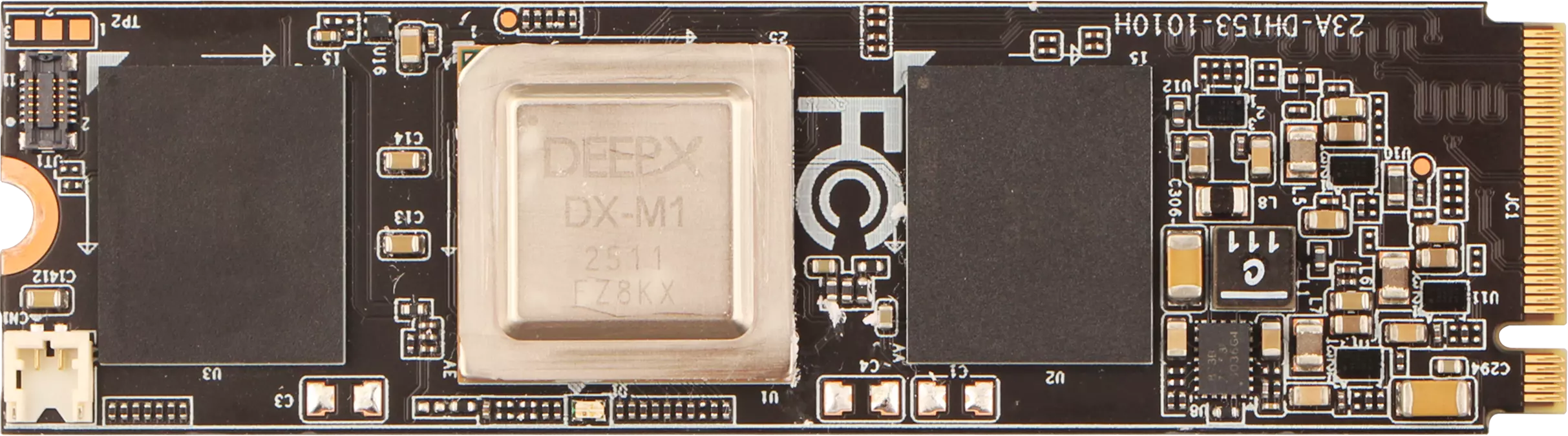
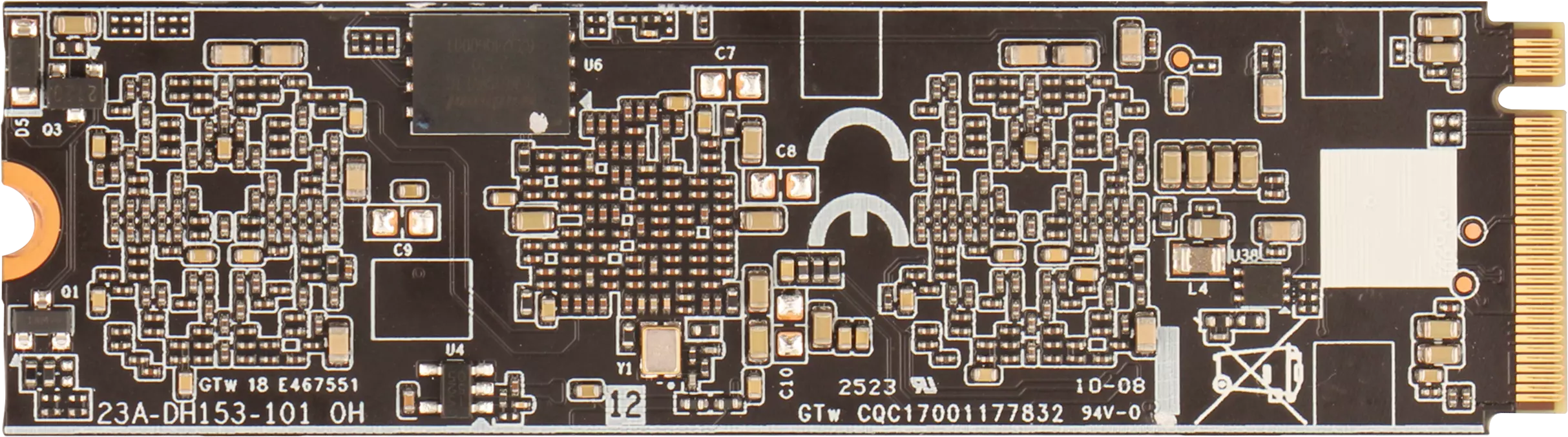
- DX-M1
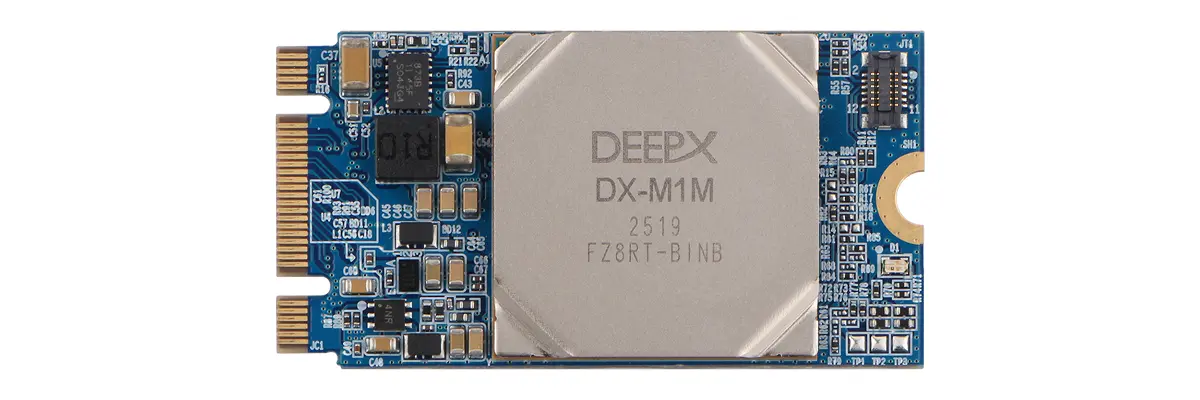
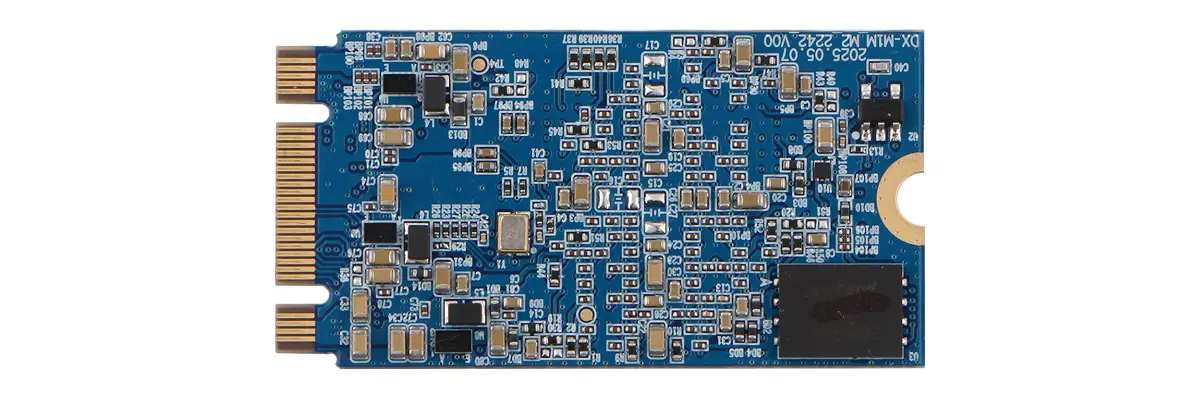
- DX-M1M
AIcore DX-M1 module (front)
AIcore DX-M1 module (back)
AIcore DX-M1M module (front)
AIcore DX-M1M module (back)
Prerequisites
Prepare the following hardware to use AIcore DX-M1 / DX-M1M:
- AI accelerator module: Radxa AIcore DX-M1 / DX-M1M
- Host board kit: A compatible host board + power adapter + boot media (such as a microSD card)
- AIcore DX-M1
The host board must provide an available M.2 M Key slot, supporting PCIe Gen 3.0
- AIcore DX-M1M
The host board must provide an available M.2 M Key or B Key slot, supporting PCIe Gen 3.0
AIcore DX-M1 / DX-M1M has been verified to work with multiple Radxa single-board computers (SBCs).
Verified Radxa-compatible boards
- ROCK 5A
- ROCK 5B
- ROCK 5B+
- ROCK 5T
- ROCK 5 ITX
Hardware installation
Follow the Hardware installation guide to install AIcore DX-M1 / DX-M1M.
For most host boards, installing an M.2 M Key add-on device follows the same general procedure. You can refer to the Hardware installation guide.
Verify hardware detection
After installing AIcore DX-M1 / DX-M1M into the host board's M.2 M Key slot and booting the OS, you can run lspci to verify whether the device is detected:
lspci
If AIcore DX-M1 / DX-M1M is detected, you should see output similar to the following:
0000:01:00.0 Processing accelerators: DEEPX Co., Ltd. DX_M1A
Environment setup
On Linux (Ubuntu, Debian), refer to DX-NPU-Driver installation and DX-RT runtime installation to install the required driver and runtime environment for AIcore DX-M1 / DX-M1M.
Example applications
After completing the steps above, you can follow DX-APP examples to run AI acceleration and inference with AIcore DX-M1 / DX-M1M.